
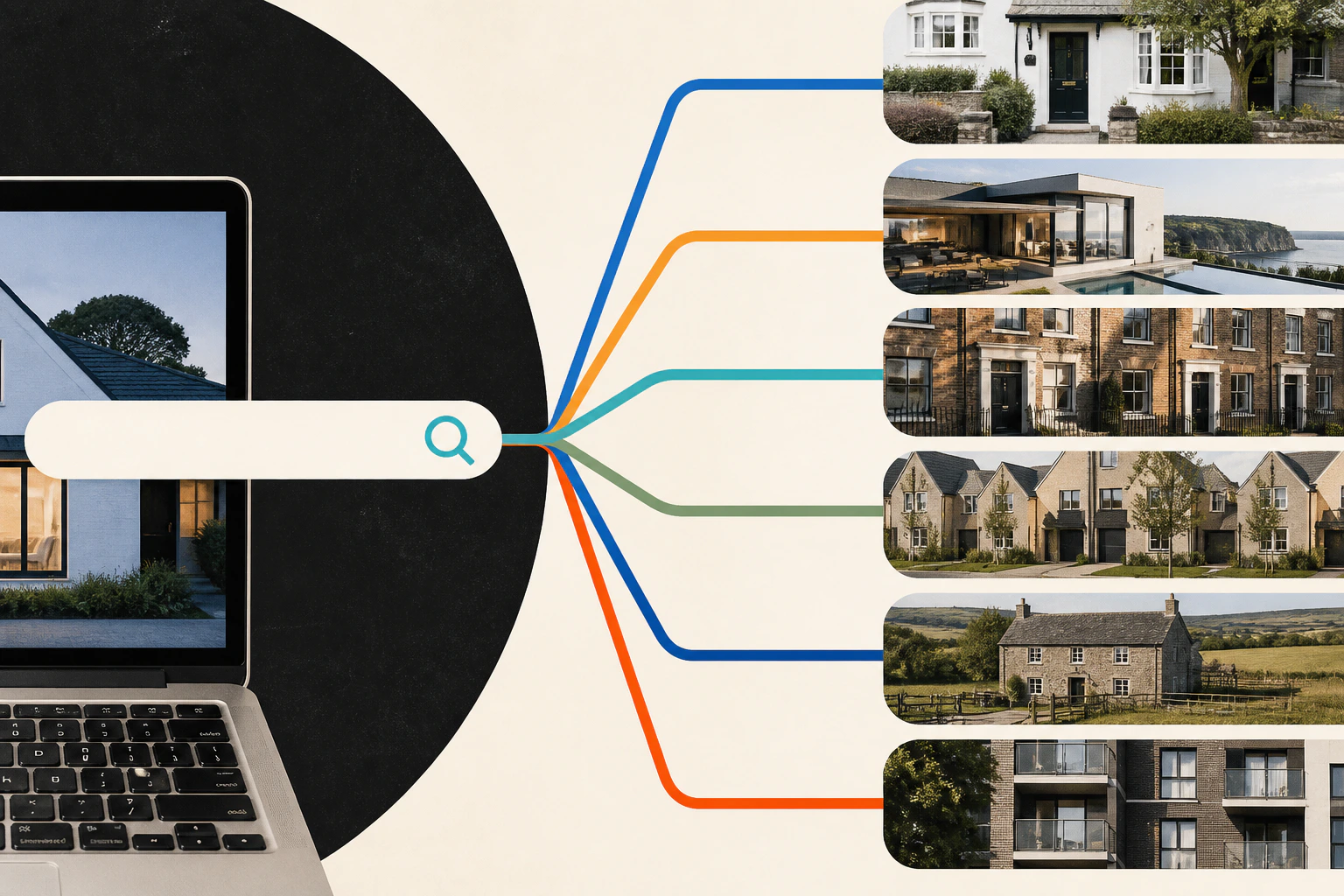
An estate agent website template has to support more than a property search. Vendors want evidence that the agent understands the local market. Landlords need to know how management works. Buyers and tenants want accurate listings and a practical route to arrange a viewing. A good starting layout gives those journeys room without making the homepage a wall of buttons.
These six original Elkwood directions are planning concepts, not downloadable themes. They show how a site can be structured around different agency models. Property data, valuation tools and portals may require integrations beyond a brochure website.
Related guidance: For useful context, read 15 Best Electrician Websites and What Makes Them Work and 15 Plumbing Website Examples That Make Enquiring Easy.
Essentials every estate agency layout needs
a clear choice between selling, letting, buying and renting;
accurate office, team and coverage information;
a valuation route that explains what happens next;
accessible property details with meaningful photographs and floorplans;
fees, redress and regulatory information where applicable;
useful local content with real knowledge behind it.
Direction | Best fit | Main emphasis |
|---|---|---|
Local independent | One or a few connected areas | People and local proof |
Premium homes | Higher-value instructions | Presentation and discretion |
Sales and lettings | Balanced agency | Clear audience routes |
Online-first agency | Digital process | Steps, scope and support |
Multi-branch group | Several offices | Location and data consistency |
Specialist property | Distinct niche | Relevant expertise |
1. The local independent agency
Lead with the places served, the named team and the reasons an owner might trust their judgement. Follow the proposition with a valuation action, recent representative property and a concise explanation of the sales or lettings process.
Make local expertise provable
Use neighbourhood guides written from genuine experience, not town names inserted into generic copy. Include transport, property types and practical considerations, then connect the guide to the appropriate branch and listings. A short video from a recognisable team member can help when it adds information rather than a slogan.
2. The premium property direction
Large photography and considered typography can suit a high-value portfolio, but elegance should not obscure price, location, floorplan or contact details. The design needs to remain quick and legible on mobile.
Support discretion and detail
Explain private-market or off-market processes accurately. Give vendors a clear route for a confidential conversation. Photography, video and editorial stories should be approved and should never imply an instruction the agent does not hold.
3. The sales and lettings structure
This template makes the first audience choice explicit. Sales, lettings and property management can share the brand while using distinct service pages, proof and calls to action.
Avoid duplicated service copy
Maintain shared office and team information once, then connect it to the right journeys. Landlord pages should discuss management scope and fees; vendor pages should explain valuation, marketing and progression. Applicants should not have to pass through either sales pitch.
4. The online-first agency
If the service is delivered mainly through an online platform, the page needs to explain the full process and where human support appears. An instant valuation or account button is not enough on its own.
Explain the boundaries
State what the fee includes, how viewings and negotiations work, who produces particulars and what happens if the property does not sell or let. Place independent reviews near the stage they help explain, with a link to their source.
5. The multi-branch group
This direction starts with a location finder and uses one dependable data model for branch details, people, opening times and properties. Each branch page should contain useful local evidence rather than a duplicated introduction.
Keep practical data consistent
A closed branch or wrong telephone number damages trust quickly. Make one team responsible for updates, use structured location data and test how enquiries are routed when a visitor begins on a property rather than a branch page.
6. The specialist agency
Commercial property, rural estates, student lettings and retirement homes require different information. A specialist layout gives that context space early, rather than looking like a residential template with labels changed.
Let expertise shape the content
Explain the transaction, evidence and terminology the audience needs. Connect named specialists to relevant case studies or guides. A niche claim becomes credible when the information model reflects the niche.
Choosing the right direction
Ask which instruction the agency most wants, which visitor journey creates the most questions and where the current handover fails. Then map the minimum pages needed to answer those questions.
Property search should not dictate the whole design if most revenue depends on winning vendor instructions. Equally, a beautiful vendor page cannot excuse poor listing filters or inaccessible property details.
Common template failures
Avoid full-screen search boxes that hide the agency proposition, meaningless “local experts” claims, auto-playing property video and valuation forms that conceal how personal data will be used. Do not create thin location pages solely to target search phrases.
Test long addresses, price qualifiers, several branches, no-result searches and withdrawn properties. Agree whether an expired listing returns a helpful alternative, redirect or Gone response.
Want the website handled for you?
Elkwood builds managed sites across the industries we support. We can adapt a suitable direction for an independent agency's real services and locations, with design, copy, hosting and reasonable updates included from £25 a month.
The pricing page explains the brochure-site scope. Property feeds, portals, CRMs and valuation integrations require separate discovery.
Quick answers
Frequently asked questions
What should an estate agent website include?
It should include services for each audience, properties or a clear portal handover, branch and team information, valuation routes, local evidence, fees and relevant regulatory details.
Does an estate agent need property search on its own site?
That depends on the stock, feed and customer journey. A searchable feed can be useful, but it must stay accurate and accessible. Some smaller agents may use a well explained portal handover.
What makes a good valuation page?
Explain whether the valuation is indicative or in person, what information is needed, who follows up and how details will be used. Do not present a lead form as an objective valuation without context.
Can one template support several branches?
Yes, if branch data, people and property relationships are modelled centrally. Copying pages manually creates inconsistencies as the group changes.